
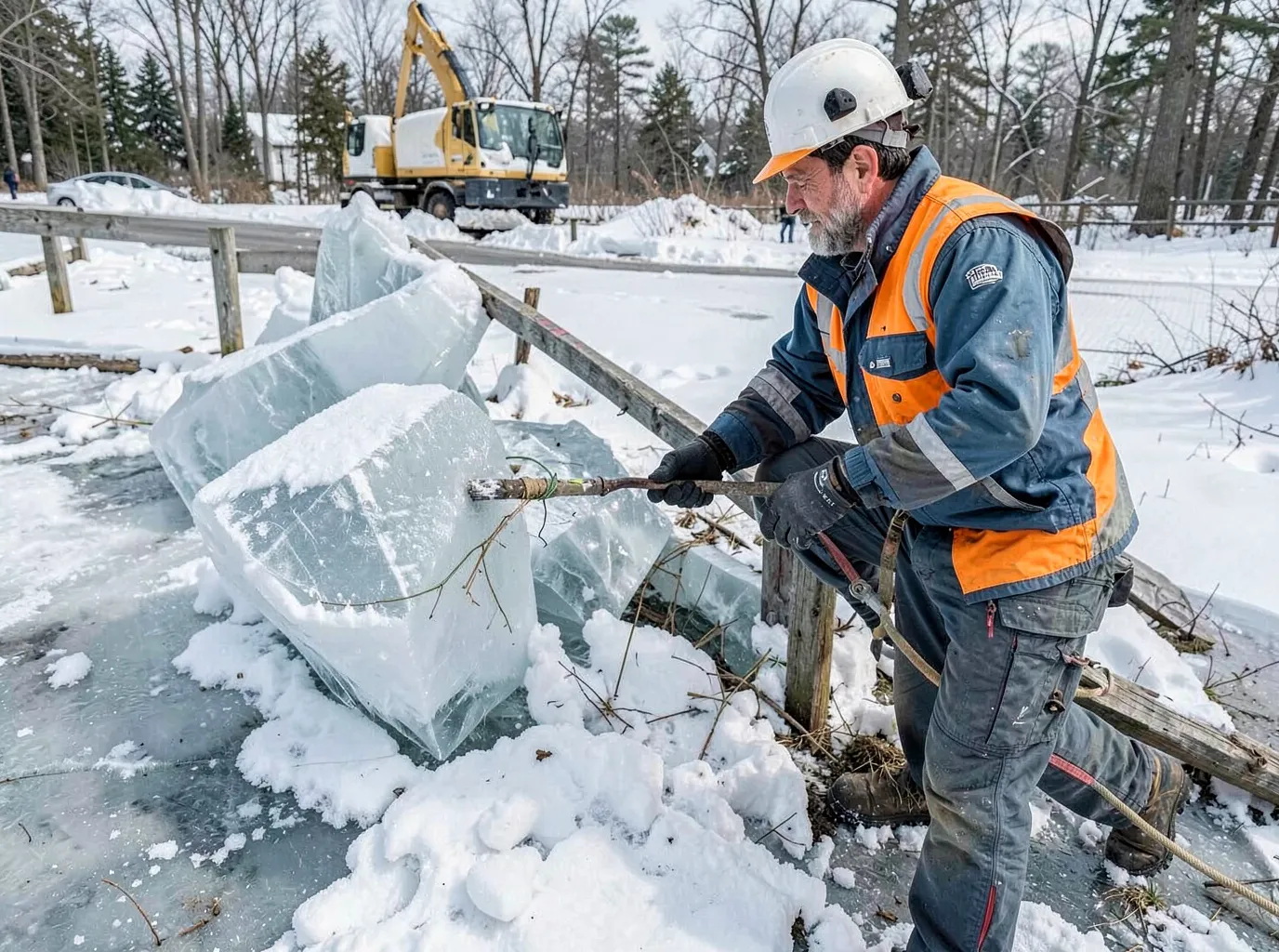
St. Cloud winters bring repeated freeze-thaw cycles that turn roof snow into ice dams along eaves, especially on homes built before 1980 in neighborhoods like downtown and near the Mississippi. Heat escaping through poor attic insulation melts snow that then refreezes at the cold eave line, backing water under shingles and into attics or walls. We use steam wands and specialized tools to clear dams without damaging shingles, then address the root cause by checking ventilation and insulation levels that are common weak points in local housing stock.
Many St. Cloud homes have limited soffit and ridge vents or blocked insulation from past DIY projects, which keeps the roof deck warm enough to create dams even after modest snowfalls. We inspect for these issues during removal and recommend targeted fixes such as adding baffles or improving exhaust paths rather than blanket solutions that do not match the actual roof geometry. Older asphalt shingles common here also become brittle in sub-zero temperatures, so crews work carefully to avoid cracking while clearing ice.
Prevention work focuses on balancing attic temperatures so the roof deck stays cold enough to avoid melting in the first place. This includes sealing bypasses around chimneys and recessed lights, adding insulation where R-values fall short for central Minnesota winters, and installing self-regulating heat cables only where structural fixes alone cannot solve the airflow problem. Homeowners in areas like Sauk Rapids and Sartell often see recurring dams on north-facing slopes due to less sun exposure and wind patterns off the river valley.
We schedule most prevention work in fall before the first heavy snow, but emergency removal calls come in throughout winter when leaks appear. Crews carry equipment sized for single-story and two-story homes typical in the county and coordinate with homeowners on access so work does not disturb daily routines during cold months.
Technician insight
In St. Cloud the thing that catches most people out with ice dams is older homes along the river valley where north-facing eaves get almost no sun and the original insulation has settled, so even modest snow loads create dams that standard roof rakes cannot reach without risking shingle tear-off.
Downtown St. Cloud Leak During January Thaw
Water stains appeared on a second-floor ceiling after a mid-week warm spell. We found a six-foot ice dam along the north eave of a 1960s ranch with settled fiberglass batts. Steam removal cleared the dam and we added two ridge vents plus sealed three recessed light bypasses; no further leaks occurred through the rest of the winter.
Ice Dam Removal & Prevention Services We Offer
✓Ice Dam Steam Removal
Controlled steam application melts ice dams on St. Cloud roofs without shingle damage or excessive water intrusion into living spaces.
✓Attic Insulation Assessment
On-site check of existing insulation and bypasses in older St. Cloud homes to identify why heat loss creates recurring ice dams.
✓Ridge and Soffit Vent Installation
Add or upgrade ventilation paths so attic air stays cold enough to prevent snow melt along eaves common in Minnesota winters.
✓Heat Cable Installation
Self-regulating cables placed along eaves and valleys to keep drainage paths open on homes where insulation upgrades alone are not enough.
✓Gutter and Downspout Clearing
Remove ice and debris from gutters so meltwater from cleared dams can drain properly instead of refreezing on the roof edge.
Ice Dam Removal & Prevention Cost in St. Cloud, MN
| Service | Typical Range | What Affects It |
|---|---|---|
| Emergency Ice Dam Removal | $350–$750 | Single-story homes with accessible eaves; two-story or complex roofs move price higher. |
| Attic Insulation Assessment | $150–$250 | Includes written findings on ventilation and bypasses. |
| Heat Cable Installation | $400–$900 | Per linear foot of eave plus controller; longer runs or valleys increase cost. |
| Ridge Vent Addition | $600–$1,200 | Depends on roof length and existing sheathing condition. |
Ranges are typical for St. Cloud, MN and confirmed with an exact written quote before any work starts.
How it works
- 1
Initial Inspection
We examine the roof, attic, and ice dam locations from both inside and outside to map heat loss points and water entry risks.
- 2
Safe Removal
Steam wands and hand tools clear the ice dam while protecting shingles and directing meltwater away from the structure.
- 3
Root Cause Check
Attic review identifies insulation gaps or ventilation shortfalls that allowed the dam to form in the first place.
- 4
Prevention Work
Targeted fixes such as added baffles or cable placement are completed to reduce future ice dam formation.
Pricing
Most ice dam jobs vary by roof height, dam length, and whether prevention work is added the same day.